

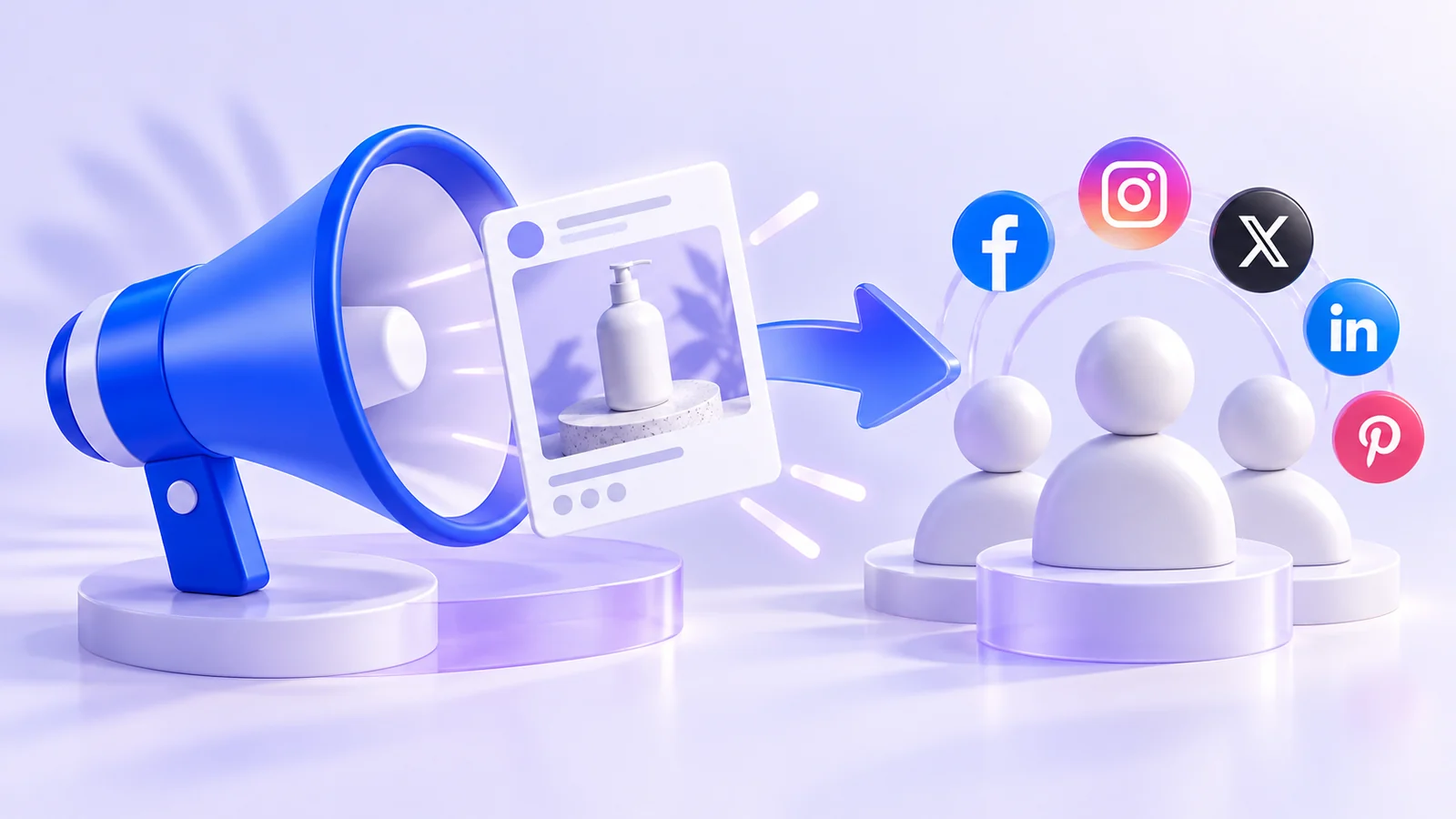
You have a good product, decent photos and a page ready to go. You’ve posted about it several times, but you’re not sure how to reach people who have never heard of you. That’s where paid advertising comes in: you set aside a budget to show a commercial message through an advertising platform, then track what people do after seeing it. Google describes Google Ads as a tool for creating online ads to promote products and services. [1]
You don’t need to memorise dozens of acronyms on day one. You need to understand three things: what are you offering, who is it for, and what do you want them to do next?
An ad is not a post, and a platform is not a strategy
An organic post is content you publish on your account without paying to distribute it as an ad. A paid ad has settings and a budget in an advertising tool. It might use an existing post or creative made specifically for the campaign. Ads Manager is where you organise that work and read the reports; it isn’t the page your audience visits. Meta Blueprint offers an introductory course on the tool. [2]
Your strategy answers a different question: why advertise in the first place? Imagine a fictional shop selling desk lamps. “We want more sales” doesn’t tell you what to do tomorrow. A clearer starting point is: “We’ll show how an adjustable lamp works, send interested people to its product page, and track completed orders.” That’s an initial plan you can review.
How does someone get from an ad to a result?
Think of the journey as a series of steps, not a magic button. Someone sees the ad, takes an interest, clicks, reaches the destination and makes a decision. They might buy, ask a question or leave. A landing page is the page that opens after the click. Depending on the ad, it could be a product page, a booking page or a form.
| Step | Question for our fictional shop | What should we check? |
|---|---|---|
| Message | Why would someone care about this lamp? | A specific benefit we can demonstrate |
| Ad | Does the image explain that benefit? | A clear product and message |
| Destination | Can they find the lamp they just saw? | The actual product page |
| Order | Can they see the price and delivery details? | Complete information before purchase |
| Follow-up | What happened after the click? | Actual orders, not just likes |
If lots of people click but don’t buy, review the journey before spending more. The ad might be unclear, the page slow or the delivery information hard to find. Those are possibilities to investigate, not an automatic diagnosis of your campaign.
Impressions, clicks and conversions are different things
An impression is one instance of an ad being shown. A click is an interaction, not an order. A conversion is an action you choose to measure, such as a completed purchase or a submitted enquiry. Name the action precisely: “We have 20 conversions” tells us little unless we know 20 of what. Google Ads reports distinguish impressions, clicks and their associated metrics. [3]
Reach refers to the number of unique people or accounts reached, using the platform’s definition. Don’t confuse it with impressions: one person may see an ad more than once.
Your first exercise: one page before any budget
Write down one product or service, one problem it solves and one person who might benefit. Then finish this sentence: “After seeing the ad, I want them to…” Choose a clear action, open its destination on your phone and try the journey without submitting a real request.
Instead of starting with “How much can I make from ads?”, ask, “Can someone who doesn’t know me understand the offer and complete the next step?” Keep your answer in your planning sheet. You’ll use it to choose a platform and build your first draft. The examples in this guide are hypothetical teaching examples, not client results or promises of performance.
Official sources
- Google Ads: service definition
- Meta Blueprint: Ads Manager basics
- Google Ads: report columns and metrics
Documentation reviewed: 16 October 2026. Interfaces and availability vary by account, market and updates. Examples and exercises are hypothetical, not campaign results.