

“This video drove sales; make ten more like it.” A familiar request—but what should be repeated? The opening, product demonstration or offer at the end? Without an answer, the team may produce many copies without learning why the original worked.
Start with a question: is opening with the problem better than showing the product immediately? The creative team gets a clear brief and the media buyer a reason to compare.
1. Write the idea before the script
For each video, record the problem, product presentation, visible evidence and requested action. If you use “hook,” explain that it means the opening intended to attract attention. The label should not replace describing the idea.
“UGC video” is not a test plan. Describe what the person says or does: trying the product, demonstrating use or answering an objection. Changing filming style differs from changing the reason to buy.
2. Decide what you will compare
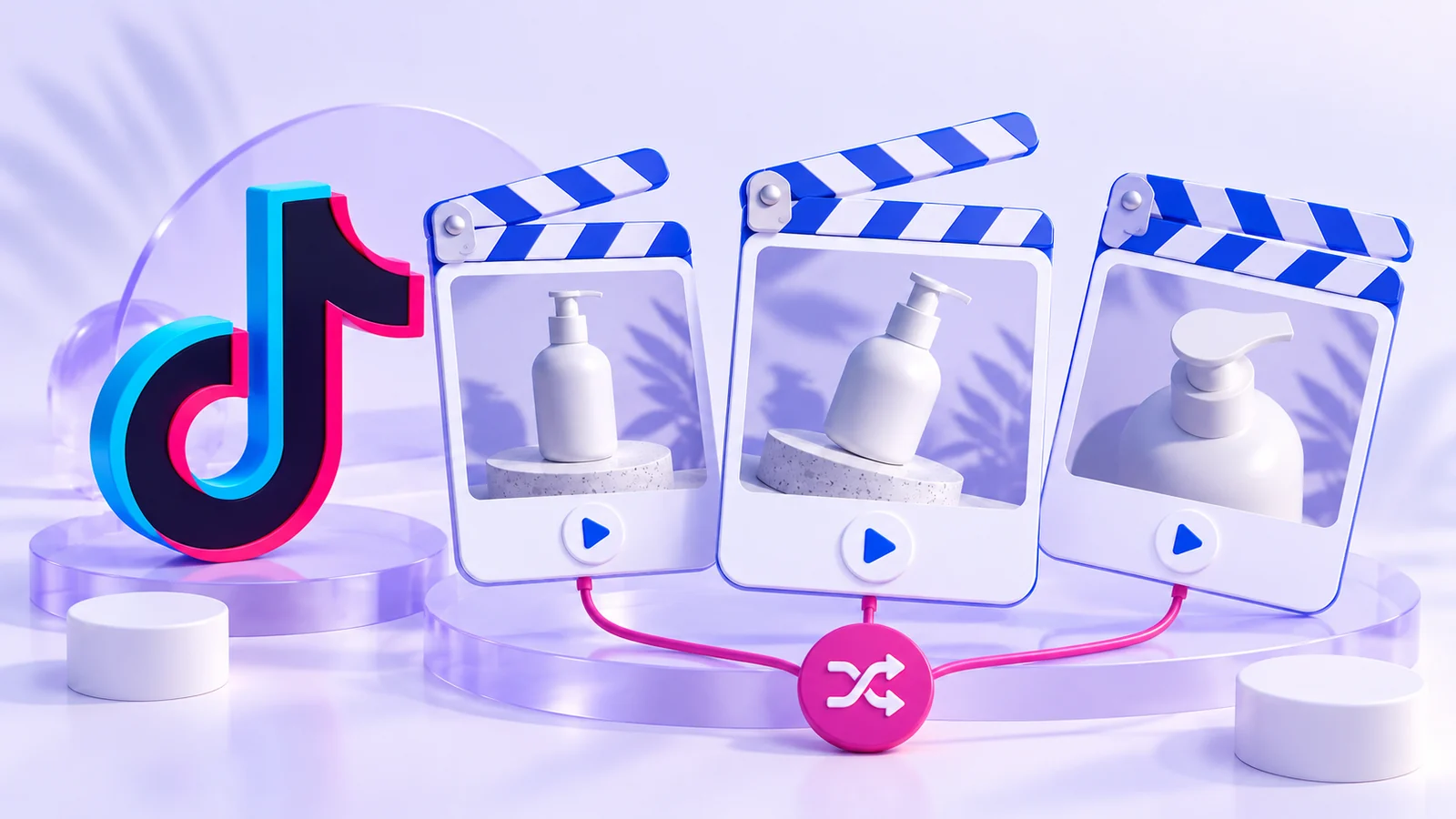
TikTok’s Split Testing tool supports variables including videos and openings. Its documentation specifies one variable per test, with compatibility depending on campaign settings. Check available options before preparing the experiment. [1]
If actor, price, audience and opening all change, you are comparing bundles. The result may be useful, but it cannot be attributed to the opening alone. Two videos with different budgets and delivery do not isolate one element’s effect either.
Practical example: turn a production request into a question
This is a hypothetical plan, not a results report.
| Test question | What changes | What we try to hold similar | Creative brief |
|---|---|---|---|
| Does a problem-led opening help? | Video opening | Offer, page and purchase definition | Two distinct openings |
| Does a demonstration answer the objection? | Evidence in the video | Other messaging where possible | Scene showing product use |
| Does another offer suit a different audience? | Entire offer | Record other differences | Separate test, not just an opening variation |
Give each video a stable name or ID so you can connect report results to the actual version later.
3. Agree the decision before testing
What matters to the client: purchase, inquiry or qualified lead? What cost is acceptable under their economics? Define budget, review period and what to do if data remains limited.
Early idea screening differs from a budget increase decision. A video with two conversions may deserve another test, but does not establish that it works across markets. Check order quality, profitability and measurement before scaling.
4. Return an actionable note to production
Replace “the video didn’t work” with observations: limited delivery, higher cost or visits without orders. Record price, page or audience changes that could affect interpretation.
Turn the observation into a specific brief: clearer opening, stronger demonstration or the same offer in another context. Testing should generate better ideas, not end with an unexplained list of winners and losers.
Official sources
Source documentation reviewed: 16 October 2026. Features and eligibility may change; check the linked documentation before implementation.